Red vs. Blue LED Light — What Is the Difference and Which Does Your Skin Need?

Red light. Blue light. Both glow, both are used in LED masks, both have dozens of clinical studies behind them. Yet they do completely different things. If you do not know which one you need — or you think they are just different colours of the same thing — this article will save you hours of googling and probably some wasted money too.
Why the colour of the light matters
The colour of LED light is not an aesthetic matter — it is a question of physics. Each colour corresponds to a different wavelength, measured in nanometres (nm). And it is the wavelength that determines how deep the light penetrates into the skin and what biological effect it triggers.
A simple principle: the longer the wavelength, the deeper the penetration. Blue light (shorter wavelength) acts on the surface. Red light (longer wavelength) penetrates deeper, all the way into the dermal layer.
It is not about which colour is “better”. It is about which problem you are addressing.
Red light (630 nm) — The collagen builder
Red LED light with a wavelength of 630 nanometres is the most clinically researched spectrum in anti-ageing and skin regeneration. It penetrates approximately 2–5 mm below the surface, directly into the dermis — the layer where collagen, elastin and fibroblasts are found.

What happens in the skin
When red light reaches the cells of the dermis, it is absorbed by the enzyme cytochrome c oxidase in the mitochondria. This enzyme is part of the cell's respiratory chain — and when it is activated by light, the mitochondria start producing more ATP (adenosine triphosphate) — cellular energy.
More energy means more active fibroblasts. More active fibroblasts mean more collagen. More collagen means firmer, younger skin.
(We explained the whole biological mechanism in detail in the article How red light works on the skin.)
Specific effects of red light
Stimulation of collagen and elastin — the main anti-ageing effect. Type I and III collagen forms the skin's “supporting framework”. After the age of 25, its production drops by 1% per year. Red light slows this decline and partly reverses it.
Reduction of fine wrinkles — a direct consequence of increased collagen production. Clinical studies repeatedly show visible improvement after 8–12 weeks of regular use.
Anti-inflammatory effect — red light dampens chronic low-grade inflammation in the skin (so-called “inflammaging”), which accelerates ageing. That is why dermatologists also recommend it after aesthetic procedures and lasers.
Improved microcirculation — better delivery of oxygen and nutrients to the cells. The result: a healthier complexion, fewer dark circles under the eyes and an overall more vital appearance.
Faster regeneration — quicker healing of micro-damage and irritation after shaving, and faster skin renewal overall.
(We wrote in detail about the effects of red light on wrinkles in the article LED mask for wrinkles.)
Who red light is ideal for
Red light is your choice if you are dealing with skin ageing, loss of firmness, fine wrinkles, a tired look, dark circles or want to improve the overall quality and texture of your skin. It is suitable for all skin types and all age groups from 25+.
Blue light (460 nm) — The bacteria killer
Blue LED light with a wavelength of 460 nanometres works completely differently from red light. It does not penetrate deeply — it acts in the epidermis and upper part of the dermis (up to 1 mm). But in this zone it does something no other colour can.

What happens in the skin
The bacterium Cutibacterium acnes (the cause of inflammatory acne) naturally produces substances called porphyrins. When blue light hits these porphyrins, it triggers a photochemical reaction that generates reactive oxygen species (ROS). These oxygen radicals destroy the bacterium from within — without antibiotics, without chemicals, without resistance.
It is an elegant mechanism: blue light does not attack the skin. It attacks the bacterium — exactly where it lives and causes problems.
Specific effects of blue light
Elimination of C. acnes bacteria — the primary antibacterial effect. It reduces the number of bacteria on the skin and in the pores, which reduces the formation of new inflammatory lesions.
Reduction of active acne — inflamed spots (papules, pustules) shrink and new ones appear less often. Most people notice an improvement after 2–4 weeks.
Regulation of sebaceous glands — some studies suggest that blue light partly dampens excessive production of sebum (skin oil), which helps with oily skin.
No antibiotic resistance — unlike oral and topical antibiotics, bacteria cannot develop resistance to blue light. The mechanism of action (photochemical destruction) simply does not allow adaptation.
(We wrote in detail about how blue light works in the article Acne elimination with blue light — a clinical study.)
Who blue light is ideal for
Blue light is your choice if you are dealing with inflammatory acne, recurring breakouts, oily skin or bacterial skin infections. It is especially effective in teenagers and young adults with active acne, but it works at any age.
Red vs. blue — a direct comparison
| Property | Red light (630 nm) | Blue light (460 nm) |
|---|---|---|
| Penetration depth | 2–5 mm (dermis) | Up to 1 mm (epidermis) |
| Main effect | Collagen production, anti-ageing | Antibacterial, anti-acne |
| Target cells | Fibroblasts, mitochondria | Cutibacterium acnes |
| Wrinkles | ✅ Strong effect | ❌ Minimal |
| Acne | ✅ Anti-inflammatory (supportive) | ✅ Primary effect |
| Skin firmness | ✅ Yes | ❌ No |
| Inflammation | ✅ Strongly anti-inflammatory | ✅ Partial |
| Irritation after shaving | ✅ Yes | ❌ No |
| Pigmentation | ✅ Partial effect | ❌ Minimal |
| Suitable age | 25+ (prevention), 35+ (treatment) | Any age with acne |
| When you see results | 8–12 weeks | 2–4 weeks |
Why combining both colours is the most effective
Now we come to the most important part. Red and blue light are not competitors — they are complementary tools that together address skin problems more comprehensively than either one alone.
Acne is never just about bacteria
Acne has four main causes: excessive sebum production, clogged pores, C. acnes bacteria and inflammation. Blue light deals with the bacteria. But inflammation — that is what red light deals with. If you only use blue, you kill the bacteria, but the inflammatory reaction continues. Combining both colours tackles acne from two sides at once.
(This is exactly what the study we wrote about in the article Comparative study of blue and red light in acne treatment confirmed.)
Inflammation + ageing = a double problem
Chronic inflammation in the skin (inflammaging) accelerates ageing. If you have acne and at the same time your first wrinkles are starting to appear — which is common between 25 and 35 — combining red and blue light addresses both problems at once. Blue clears the acne, red starts building collagen and calms the inflammation the acne left behind.
One problem, two solutions
Take a typical scenario: a man or woman, 28 years old, occasional acne on the chin and jaw, first fine lines around the eyes, an oily T-zone, skin irritated after shaving or make-up.
Blue light only = clears the acne, but does nothing for wrinkles, firmness or irritation. Red light only = improves wrinkles and irritation, but the acne comes back. Both colours together = acne under control + the skin regenerates + inflammation subsides.
(You will find more about why an LED mask also works for men's skin in the article LED mask for men.)
How to use red and blue light correctly
Frequency and duration
The same rule applies to both colours: 3–5× a week, 10 minutes per session. Consistency matters more than duration. Better 10 minutes every other day than 30 minutes once a week.
What time of day
Red light is most effective in the evening — the skin naturally regenerates during sleep and red light boosts this process. After LED therapy is the ideal time to apply a serum with peptides or retinol.
Blue light can be used at any time — bacteria do not follow a daily schedule. But if you combine it with red, it is most convenient to do both colours in one session in the evening.
Order for combined use
If your mask lets you switch between colours, the recommended order is: first blue light (antibacterial effect), then red light (regeneration and anti-inflammatory effect). Blue “cleans”, red “builds”.
Clean skin is a must
Wash and dry your skin before every LED treatment. No make-up, no cream, no layer between the LEDs and the skin. The light has to penetrate directly.
What about other LED light colours? Do you need them?
Some masks on the market offer 5, 7 or even 10 different colours — green, yellow, orange, turquoise... It sounds impressive. But the truth is different.
Red (630 nm) and blue (460 nm) light have by far the strongest scientific evidence. There are hundreds of peer-reviewed clinical studies on these two wavelengths. For the other colours, research is significantly more limited — often individual small studies rather than an established scientific consensus.
That does not mean other colours do not work. It means that red + blue is the proven foundation you can rely on. Everything else is a bonus — nice to have, but not essential.
(We wrote more about how to tell quality LED masks from marketing promises in the article Not every LED is the same.)
Frequently asked questions
Can I use red and blue light on the same day?
Yes, and it is even recommended. Ideally in a single session — blue first, then red. The total time is still only around 10 minutes.
Which colour should I use if I have acne AND wrinkles?
Both. Blue light will help with acne and red with wrinkles and overall skin quality. It is precisely the combination of both colours in one mask that tackles this common problem most effectively.
Does blue light also work on blackheads (comedones)?
Blue light is most effective on inflammatory acne (red spots, pustules). On blackheads and whiteheads (comedones), which are non-inflammatory, it has a weaker effect — those are more a matter of skin cleansing and exfoliation.
Is blue light safe for the eyes?
Yes, when used correctly. Close your eyes during the LED treatment and do not look directly into the LEDs. Quality masks are designed so that the light is directed at the skin, not into the eyes.
How long does it take before I see results?
It depends on the problem. Acne (blue light): improvement after 2–4 weeks. Wrinkles and firmness (red light): visible changes after 8–12 weeks. Inflammation and irritation: often after just the first week.
Do I need a mask with more than two colours?
For most people, no. Red and blue light cover the two biggest skin problems (ageing and acne) with the strongest scientific evidence. More colours do not automatically mean better results — they mean more marketing.
Conclusion: Two problems, two colours, one device
Red light builds. Blue light cleans. Together they form the most comprehensive non-invasive tool for everyday skincare that beauty tech offers today.
If you are only dealing with wrinkles — red light is enough. If you are only dealing with acne — blue light is enough. If you want to tackle both (and that is what most people between 25 and 45 want) — you need a mask that has both colours.
You do not need 7 colours. You do not need 10 modes. You need two clinically proven spectra at sufficient intensity — and the discipline to use the mask regularly.
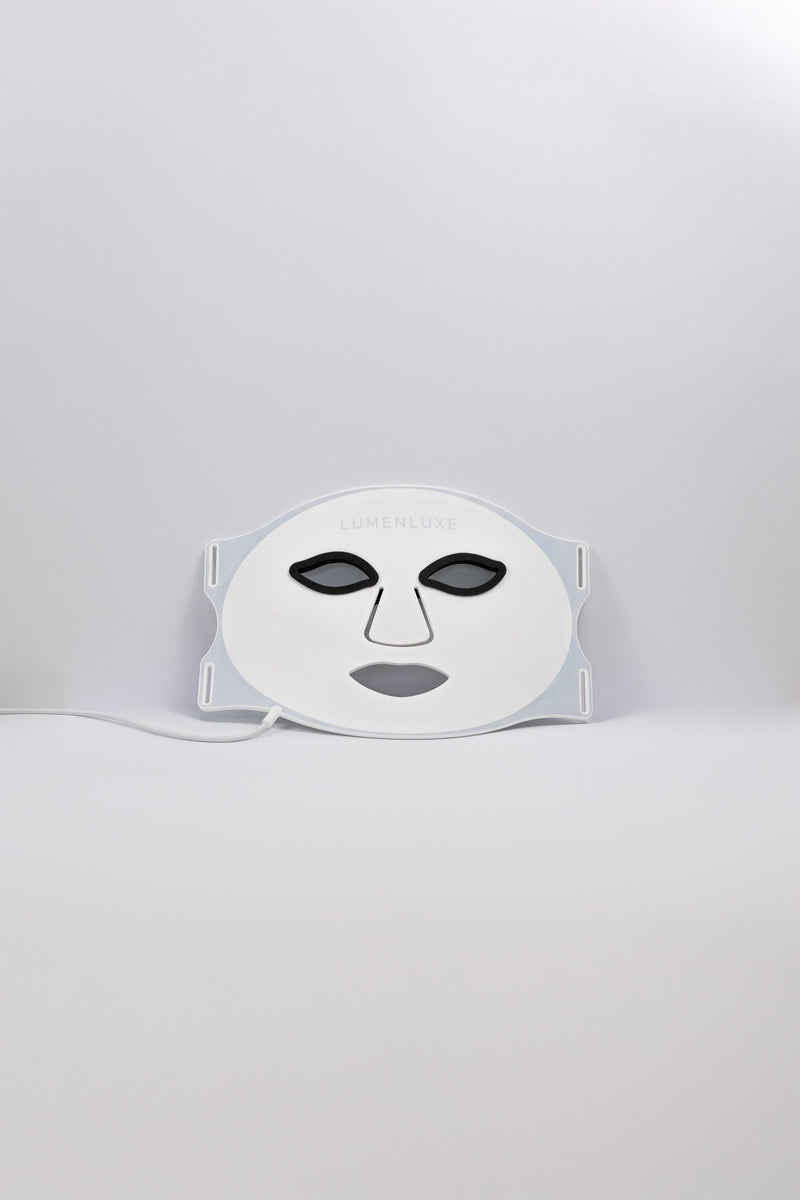
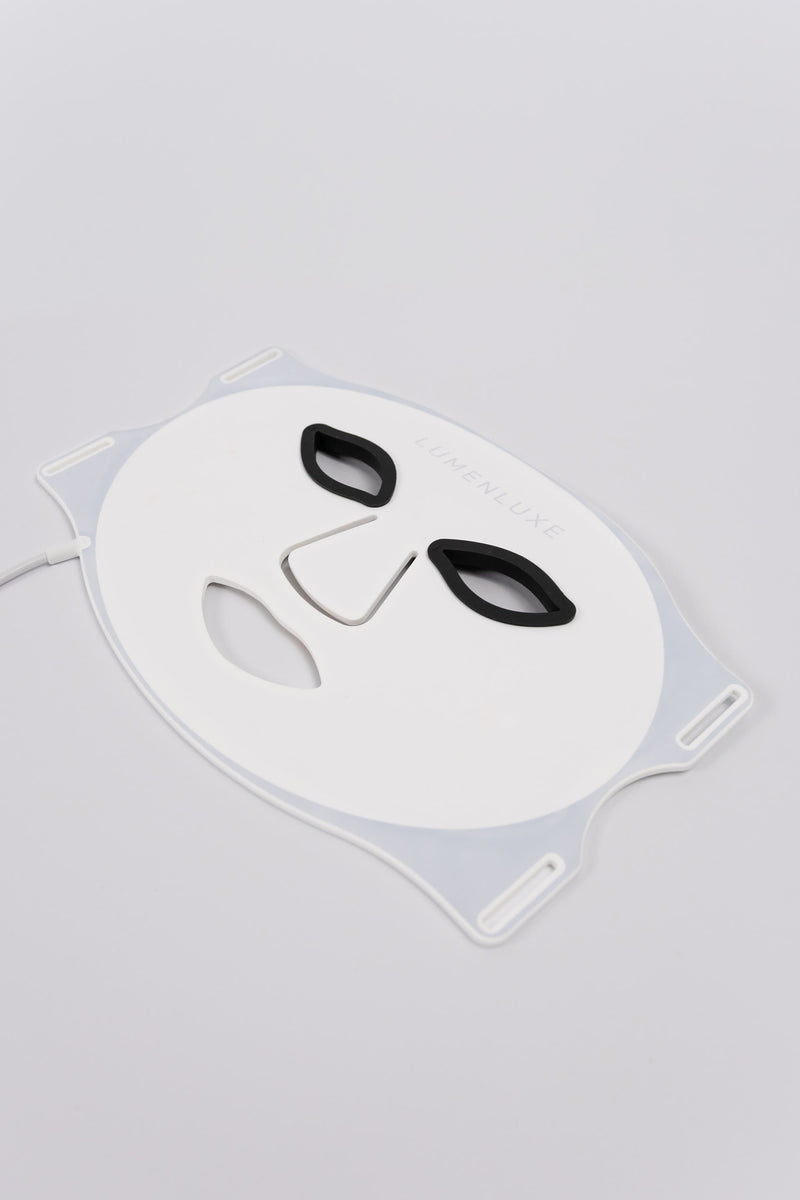
Take a look at the LumenLuxe LED mask — red + blue light in one device, clinically calibrated wavelengths, 60-day satisfaction guarantee.