LED Facial Mask for Wrinkles — How Red Light Rebuilds Collagen

LED masks promise younger skin without needles, without chemical peels and without a visit to a clinic. It sounds like a marketing dream — but behind these devices is real science that dermatologists have been studying for more than two decades. In this article we honestly explain how red light acts on wrinkles, why this particular wavelength is the gold standard of anti-ageing, what you can realistically expect, and when it does (and does not) make sense to use an LED mask.
How do wrinkles actually form?
Before we explain how an LED mask tackles wrinkles, we need to understand what causes them. Without this context you will not understand why light therapy is so effective — or why it works more noticeably for some people than for others.
Intrinsic (chronological) ageing
Every year your body produces less collagen — the protein that forms the firm “scaffolding” of the skin. After the age of 25, collagen production drops by roughly 1% per year. At the same time, the activity of fibroblasts — the cells that produce collagen and elastin — declines. The result is skin that gradually loses firmness and elasticity.
Extrinsic ageing (photoageing)
Up to 80% of the visible signs of facial ageing are caused by UV radiation. The sun breaks down collagen fibres, damages the DNA of skin cells and creates free radicals that accelerate ageing. Add smoking, air pollution, chronic stress and lack of sleep — and you have a recipe for premature wrinkles.
Why skin firmness declines with age
As collagen and elastin decline, so does the skin's ability to retain water. Hyaluronic acid in the deeper layers breaks down faster. Cell renewal slows down — while 20-year-old skin renews itself in 28 days, after the age of 50 this cycle takes as long as 45 to 50 days. That is why wrinkles do not appear “suddenly” — they are the result of years of gradual biological change.
How an LED mask acts on wrinkles
This is where the scientifically interesting part begins. LED therapy is not just “shining light at your face” — it is a biologically targeted intervention at the cellular level.
Photobiomodulation — how the skin responds to light
The official scientific term for the effect of an LED mask is photobiomodulation (PBM), sometimes also referred to as LLLT (Low-Level Light Therapy). It works on a simple principle: specific wavelengths of light penetrate the skin and deliver energy to the cells. This triggers a cascade of biochemical reactions — including the formation of new collagen.
The key receptor is the enzyme cytochrome c oxidase in the mitochondria. When red light hits it, the mitochondria increase their production of ATP — the cell's “energy” — several times over. More energy means more active fibroblasts and more collagen.
Red light (630–660 nm) — the gold standard for collagen production
Wavelengths of 630 to 660 nanometres are the most clinically researched spectrum for the anti-ageing effects of LED therapy. The overwhelming majority of published studies on photobiomodulation and skin ageing were carried out in exactly this band. The reason is simple: red light penetrates precisely into the dermal layer (approximately 2–5 mm deep), where the fibroblasts — the cells responsible for collagen production — are located.
In the dermis, red light stimulates:
- Synthesis of type I and III collagen — the main types responsible for skin firmness and elasticity
- Elastin production — restores the skin's elasticity
- Hyaluronic acid production — hydration from within
- Improved microcirculation — better delivery of oxygen and nutrients to the cells
The result is visible after a few weeks of regular use — fine wrinkles smooth out and the skin takes on a firmer, more youthful appearance.
Calming chronic inflammation
Red LED light also calms chronic low-grade inflammation in the skin, which accelerates ageing (so-called “inflammaging”). That is why dermatologists recommend it not only for wrinkles but also after aesthetic procedures, lasers and peels.
(We wrote about the biological mechanisms in more detail in the article How red light works on the skin.)
Which types of wrinkles red light improves the most
Not all wrinkles are the same — and red light does not work equally on all of them. Honestly:
Where LED therapy gets the best results:
- Fine wrinkles around the eyes (so-called “crow's feet”) — thin skin responds quickly
- Fine lines on the forehead and between the eyebrows — especially before they become “etched in”
- Loss of firmness in the cheeks and jawline
- Nasolabial folds at an early stage
- Neck wrinkles, if your mask also covers the neck
Where LED has limited effects:
- Deep expression lines “carved” by decades of movement — the effect is weaker there
- Wrinkles caused by volume loss (hollow cheeks) — these are better addressed with fillers
- Pronounced scars — improvement yes, but slow
An LED mask is a preventive and progressive tool — the best results will be seen by those who start before the wrinkles “harden”.
What clinical studies say
Research on photobiomodulation is extensive — the PubMed database contains hundreds of peer-reviewed studies on LED therapy and skin ageing. Recurring findings across the research:
- Red light in the 630–660 nm band stimulates measurable production of type I collagen in the dermis
- Regular application (3–5× a week for 8–12 weeks) visibly reduces fine wrinkles and improves skin texture
- The effect is directly dependent on irradiance (mW/cm²) and dose (J/cm²) — weak devices do not deliver a therapeutic level
- LED therapy is safe for long-term use and, unlike a laser, causes no thermal damage
The last point is critical. Cheap masks from unknown online shops often do glow in the “right” colour, but too weakly to trigger a real biological effect. A manufacturer that does not publish the intensity and calibration of its LEDs is almost always hiding behind marketing.
For a deeper look at the specific data, read the LED skin rejuvenation study — what the microscope showed after 12 weeks.
How long it takes before you see the first results
This is the number one question we get. The answer is: it depends on your skin, your age and your discipline.
Weeks 1–4: First signs
The skin becomes more hydrated and gains a slight healthy glow. Many clients notice calmer skin and reduced redness at this stage. Do not expect a visible improvement in wrinkles yet.
Weeks 5–8: Visible changes
Fine wrinkles around the eyes and on the forehead begin to smooth out. The skin looks firmer and more even. This is the moment when most people notice: “Something is happening.”
Weeks 9–12 and beyond: Structural change
Because collagen cycles take approximately 90 days, full results only show after 3 months of regular use. The skin is noticeably firmer, wrinkles shallower and the overall tone more even.
Long-term use (6+ months)
An LED mask is not a “one-off treatment”. Just like exercise — if you stop, the body gradually returns to its starting point. For a lasting effect, it is ideal to continue 3–5× a week in the long term, for 10 minutes per session.

How to use the mask to maximise its anti-wrinkle effect
The mask alone does not work miracles — the right protocol does.
1. Clean skin is the foundation. Never put the mask on over make-up or a greasy cream. Cleanse and dry your skin before application. (You will find detailed instructions in the article How to prepare your skin before an LED mask.)
2. Regularity matters more than duration. Better 10 minutes 4× a week than 40 minutes once a week. Cells respond to repeated stimulation, not to one-off bursts.
3. Combine with suitable serums. After LED application, the skin is receptive to active ingredients. Suitable options are serums with peptides, hyaluronic acid, vitamin C (in the morning) and retinoids (in the evening, after LED).
4. Do not combine with aggressive peels on the same day. AHA/BHA acids can overload the skin if you add LED on top. Alternate the days.
5. Protect your eyes. Close your eyes during the treatment and never look directly into the glowing LEDs.
Who an LED mask for wrinkles is ideal for — and who it is less suited to
Ideal candidate:
- 30+ years old, first fine wrinkles and a slight loss of firmness
- Wants preventive anti-ageing without invasive procedures
- Has the patience for an 8–12-week cycle
- Is looking for a complement to an existing skincare routine, not a replacement
Less ideal candidate:
- Expects results after a week
- Has extremely deep “etched-in” wrinkles (the effect is smaller there)
- Takes photosensitising medication (doxycycline, isotretinoin, some antidepressants) — always consult a doctor
- Has an active skin malignancy, lupus or light-induced epilepsy — LED therapy is not suitable
If you are not sure whether an LED mask is safe for you, read Safety profile and long-term effects of LED phototherapy or consult a dermatologist.
Frequently asked questions
Does an LED mask work on older skin (50+) too?
Yes, it does — just more slowly. In skin over 50, fibroblasts are less reactive, so it takes longer for results to show. We recommend at least 4–6 months of regular use combined with a good anti-ageing routine.
Can I use an LED mask together with retinol?
Yes, and it is even recommended. Do your LED therapy in the evening before applying retinol — red light prepares the skin and increases the absorption of active ingredients. Some studies suggest that combining red light and retinol gives a stronger anti-ageing effect than either one alone.
Is an LED mask safe for sensitive skin and rosacea?
Mostly yes — unlike a laser, LED light does not heat the skin and does not cause micro-damage. People with rosacea often report improvement (reduced redness), not worsening. However, always start with shorter sessions (5–10 minutes) and watch how your skin reacts.
How often should I use the mask for wrinkles?
Optimally 3–5× a week, 10 minutes as recommended by the manufacturer. Less is not enough, and more will not bring a better result — cells have a limited capacity for photobiomodulation.
Will an LED mask replace Botox?
No. An LED mask and Botox work in completely different ways. Botox paralyses muscles and addresses expression lines. Red LED light stimulates collagen production and addresses texture, firmness and overall skin quality. The best results come from combining them — LED for skin quality, Botox for pronounced expression lines.
Which wavelength is best for wrinkles?
The strongest scientific evidence for anti-ageing and collagen production exists for red light in the 630–660 nm band. It is the most clinically researched spectrum for skin ageing and forms the basis of practically all seriously tested LED masks designed to reduce wrinkles.
Conclusion: Is an LED mask for wrinkles worth the investment?
If you are looking for a non-invasive, safe and scientifically backed method for preventing and reducing wrinkles, an LED mask with red light is today one of the best options beauty tech has to offer. It is not an overnight miracle — but with regular use it delivers measurable and lasting results without needles, chemicals or recovery time.
The key lies in the quality of the device: the right wavelength (630–660 nm), precisely calibrated LEDs, sufficient irradiance and medical certification. A cheap €50 mask will not give you after three months what a clinically dimensioned device will.
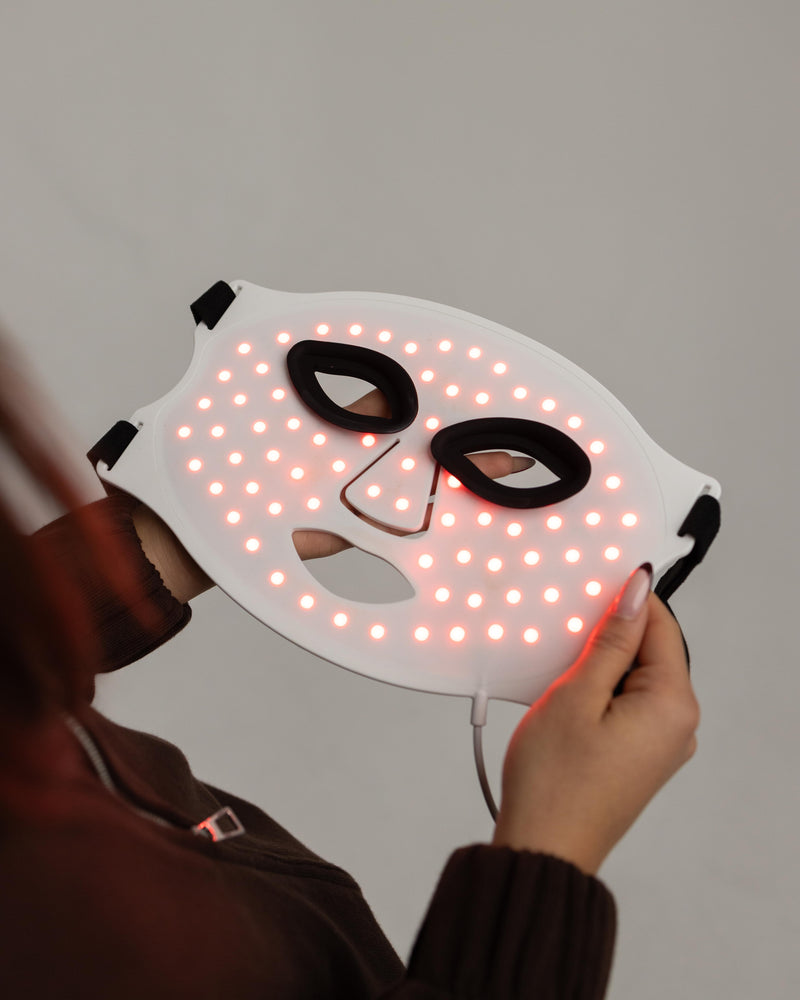
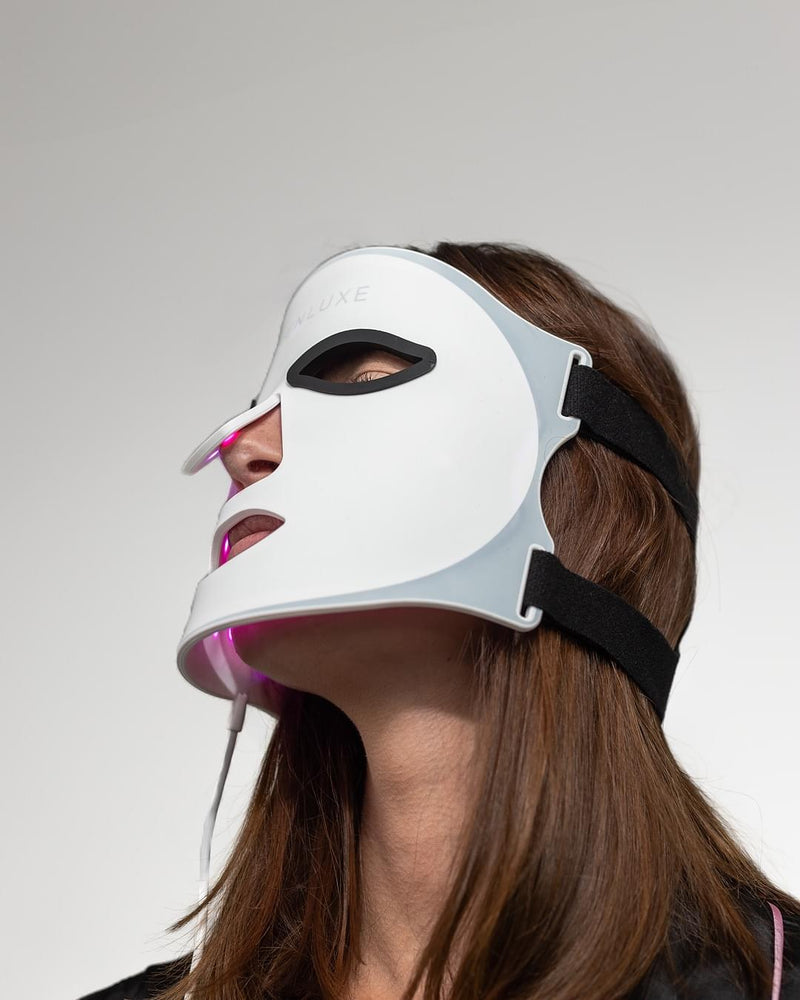
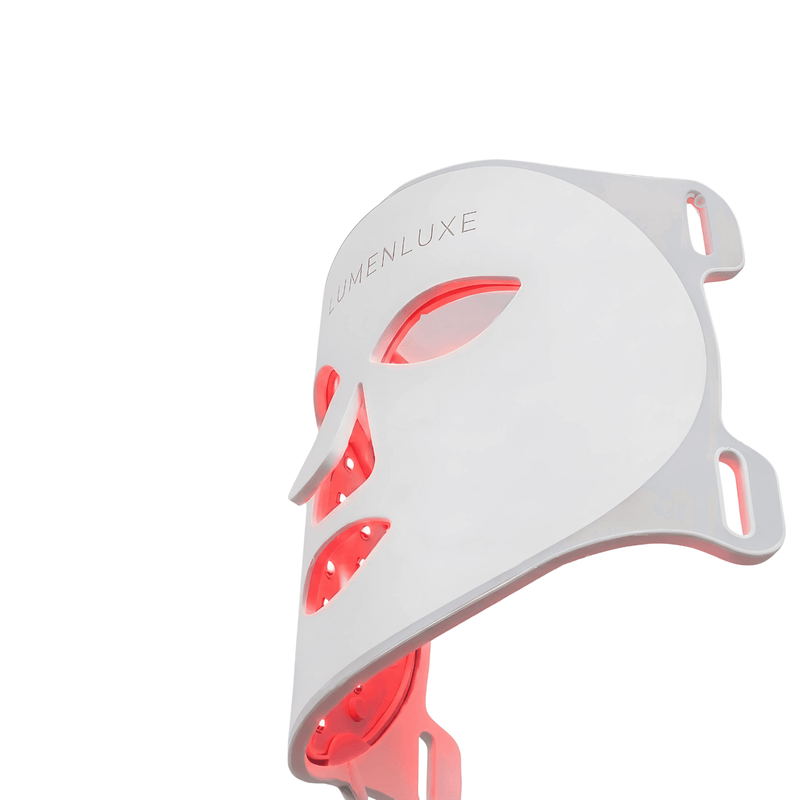
Take a look at the LumenLuxe LED mask — with red light calibrated for clinical effectiveness, a 60-day satisfaction guarantee and dermatologists' recommendations.