How red light works on the skin - the complete guide | LumenLuxe

Red light for the skin and the LED face mask are not a fad invented on TikTok. This is a technology backed by decades of scientific research — today it is used by dermatology clinics around the world, and research teams at prestigious institutions such as Harvard Medical School have been studying it for a long time.
The mechanism behind it is called photobiomodulation. In this guide we explain, without marketing buzzwords, what really happens in your skin, which wavelengths work and what the real clinical data say.
What red light is and why it is safe
Light is measured in nanometres (nm). Ultraviolet (UV) radiation below 400 nm causes DNA damage and is the cause of both photoaging and melanoma. Red light in the 630–660 nm band lies far from this dangerous zone — it penetrates the deeper layers of the skin without damaging the genetic material of the cells.
The biological window — why this particular wavelength
The skin has a so-called biological window — a range of wavelengths that tissue can absorb instead of reflecting them. Red light in the 630–660 nm band lies in the middle of this window and can penetrate as deep as the dermis — a depth of 3–5 mm, where the fibroblasts responsible for collagen production reside.
Photobiomodulation — the mechanism according to Hamblin
Dr. Michael Hamblin of Harvard Medical School, one of the world's most cited experts on photobiomodulation, describes the mechanism as follows: photons of red light are absorbed by the enzyme cytochrome c oxidase in the mitochondria — and trigger a cascade of biological reactions. Hamblin, 2017 — PubMed
- Increased ATP production: Stimulated mitochondria produce more energy (ATP). Cells have more capacity for repair and protein synthesis.
- Fibroblast activation: Fibroblasts — the cells responsible for collagen and elastin — work more intensively and produce more structural proteins.
- Reduced oxidative stress: Light modulates levels of reactive oxygen species (ROS), which dampens inflammatory processes in the skin. Hamblin & Demidova, 2006
Red vs. blue light — what each one addresses
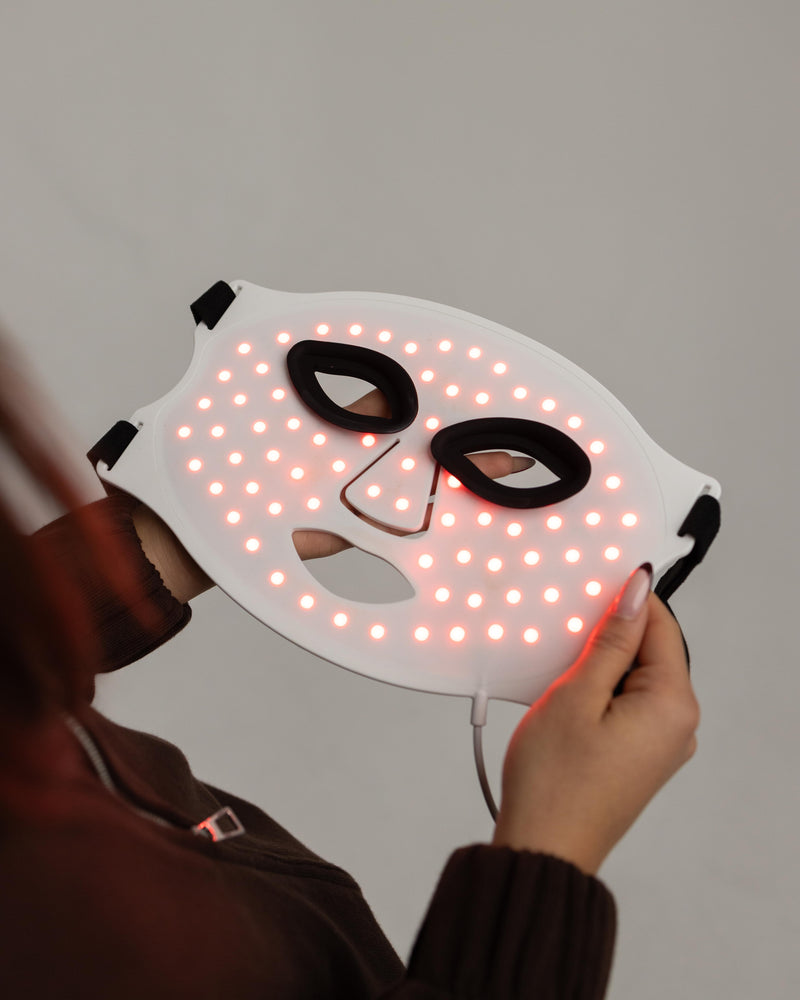
LumenLuxe combines two wavelengths, each targeting a different skin concern:
| Wavelength | Type of light | Primary effect | Penetration depth |
|---|---|---|---|
| 630–660 nm | Red | Collagen, elastin, wrinkle reduction, healing | Dermis (3–5 mm) |
| 460 nm | Blue | Elimination of P. acnes bacteria, acne prevention | Epidermis (surface) |
Red light works in depth and stimulates cell renewal. Blue light acts on the surface and destroys Propionibacterium acnes bacteria — the main culprit behind inflammatory acne. Combining both spectra in a single device is therefore the ideal solution for most skin types.
What clinical studies say
Photobiomodulation is one of the better-researched aesthetic technologies. A few key findings:
- A randomised study (Weiss RA et al., 2005, Lasers in Surgery and Medicine) followed 90 patients with photoaged skin treated with an LED array panel. Histological analysis showed an increase in collagen in the papillary dermis in 100% of samples after treatment, with an average 28% increase in type I collagen density. PubMed ID: 15654716
- Dr. Hamblin's review papers summarise evidence from dozens of clinical and laboratory studies and confirm the anti-inflammatory and regenerative effects of photobiomodulation at 630–660 nm. Hamblin, 2017, AIMS Biophysics
What exactly red light helps with
Reduction of wrinkles and fine lines
Activated fibroblasts produce more type I and III collagen — the protein that gives the skin volume and fills in fine lines. The effect builds up gradually, typically after 4–8 weeks of regular use.
Improved skin tone and texture
Red light supports cell renewal and modulates melanocyte activity, which reduces hyperpigmentation. The skin looks more even and radiant.
Recovery after acne
While blue light eliminates P. acnes bacteria, red light finishes the job — it reduces redness and swelling and helps acne scars fade thanks to its anti-inflammatory action.
Skin firming
Higher elastin production improves skin elasticity. Women after pregnancy or after significant weight loss will especially appreciate the effect.

When you will see results
| Time frame | What happens in the skin | What you can see |
|---|---|---|
| 1–2 weeks | Increased circulation and hydration | More radiant tone, less tired-looking skin |
| 4–6 weeks | Fibroblast activation, collagen increase | Fine lines filled in, better texture |
| 8–12 weeks | Measurable increase in collagen density | Visible wrinkle reduction, firmer skin |
| 3–6 months | Long-term remodelling of the dermis | Lasting improvement with continued use |
Frequently asked questions
Is red light safe for every skin type?
Yes — red light is safe for all phototypes (Fitzpatrick I–VI). It contains no ionising radiation and does not cause DNA damage. The exceptions are people with drug-induced photosensitivity or epilepsy sensitive to light stimuli — we recommend they consult a doctor.
Can I combine red light with retinol?
Yes, these approaches complement each other. Recommended order: LED therapy first, then retinol or AHA/BHA acids — not the other way round, so you do not irritate skin that is temporarily more sensitive.
How long does one session take?
10–20 minutes a day is optimal. A longer session does not mean a better result — cells have an absorption ceiling and cannot use additional photons once they are saturated.
Is a home mask or a clinic worth it?
Clinical devices have a higher power density per area, but a single session costs €40–80. LumenLuxe pays for itself after a few sessions and you can use it every day — which is key for collagen remodelling.