Blue Light Acne Elimination - Clinical Study and Results after 8 Weeks

Acne troubles millions of women regardless of age. Creams dry the skin out, antibiotics have side effects, lasers are expensive. Is there a solution that works at the cellular level, without chemicals and without side effects?
Yes. And science has been studying it since 2009.
The study that changed the approach to at-home acne treatment
Dr. Michael H. Gold and colleagues published a study in the Journal of Clinical and Aesthetic Dermatology with a clear goal — to find out whether patients can achieve an improvement in acne at home using a portable blue-light LED device.
How blue light destroys acne-causing bacteria
To understand why blue light works, you need to know the enemy — the bacterium Cutibacterium acnes, previously known as Propionibacterium acnes.
This bacterium lives naturally in the sebaceous glands of the skin. Under normal circumstances it causes no problems — but when it overmultiplies or when pores are clogged, it causes the inflammation we know as a pimple.
The mechanism of blue light is elegant and precise:
Cutibacterium acnes naturally produces substances called porphyrins. When porphyrins are exposed to blue light, the electrons in these molecules become excited. For this purpose, LumenLuxe uses blue light with a wavelength of 460 nm. The excited porphyrins create oxygen free radicals inside the bacterium. These free radicals selectively destroy the bacterium — from the inside, without damaging the surrounding healthy skin.
The result: the inflammation dies out right at its source. Not by masking, not by drying, not by a chemical attack on the whole skin. By selectively eliminating the bacterium that causes the inflammation.

Study methodology — 8 weeks of at-home therapy
Dr. Gold's study lasted 8 weeks. The participants suffered from mild to moderate facial acne and treated themselves with blue light. The number of inflammatory lesions was counted over the course of the study.
An important detail — the treatment took place at home, without medical supervision. The study therefore tested real-life conditions of home use, not a controlled clinical environment.
Results
In the published studies by Dr. Gold and colleagues on home use of blue light for acne, the reduction in the number of inflammatory lesions was typically around 60–70% after several weeks of regular use.
A large proportion of participants reported clearer skin and reduced sebum production.
Fewer side effects — unlike retinoids and benzoyl peroxide, which often cause redness and peeling.
Conclusions of the research
At-home blue light therapy is effective at reducing the number of inflammatory forms of acne. Results comparable to some clinical procedures are achievable at home.
The therapy is safe for all skin phototypes. LED light contains no UV radiation and does not cause photosensitivity.
The method is practical — it lets patients treat themselves in the comfort of their home, without waiting for an appointment and without the cost of clinic sessions.
Why blue light is better than conventional acne products
Most acne products on the market work on the principle of drying. Salicylic acid, benzoyl peroxide, retinoids — all of these substances attack acne by drying out the skin and disrupting the skin barrier.
Blue light works completely differently. It does not damage the skin barrier. It does not disrupt hydration. It attacks the bacterium selectively — and leaves healthy skin untouched.
Combining blue and red light — a complete acne solution
Blue light eliminates the bacterium and stops the inflammation. But acne leaves behind scars, red marks and hyperpigmentation. This is where red light comes in.
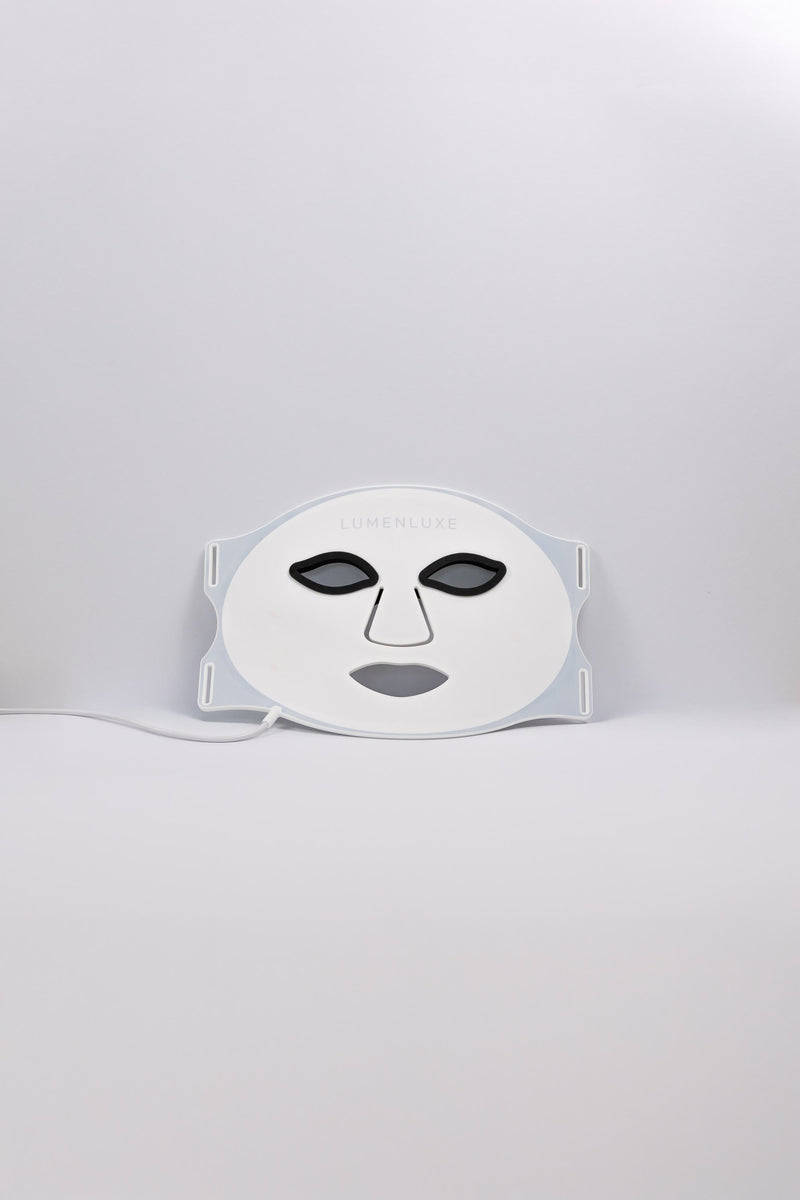
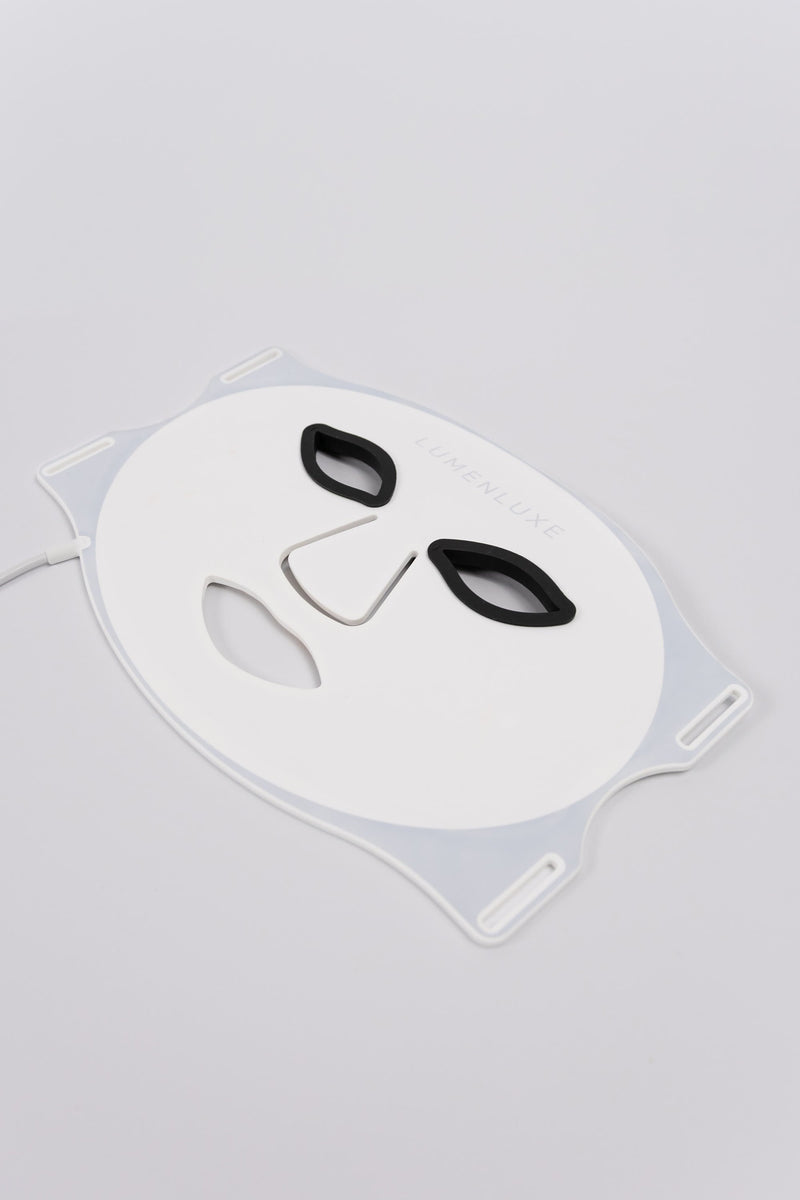
The LumenLuxe LED face mask combines both types of light. The protocol for acne-prone skin:
Blue light — 460 nm — eliminates Cutibacterium acnes and stops active inflammation.
Red light — 630 nm — once the inflammation has subsided, it speeds up the healing of small scars, reduces hyperpigmentation and stimulates the renewal of healthy skin.
Alternating both modes gives a comprehensive result that acne products alone cannot achieve — you eliminate current inflammatory spots and at the same time heal the damage that previous acne left behind.
Recommended protocol for acne-prone skin
Frequency — at least 5× a week, ideally daily.
Duration — 10 minutes per session.
Order — first thoroughly cleanse your skin, then the LED session, and after the session a light hydrating serum without comedogenic ingredients.
What to avoid — do not apply heavy creams or make-up immediately before a session. Layers of product block light penetration.
Waiting for results — the first improvement is visible after 2 to 4 weeks. A marked reduction in acne sets in after 6 to 8 weeks of regular use.
Who blue light is ideal for
Blue light is ideal for women with active inflammatory acne — pimples, cysts, inflammatory lesions. For comedones — blackheads and whiteheads — a combination of blue light with regular exfoliation is more effective.
Blue light is also safe during hormonal fluctuations — menstruation, perimenopause — when acne commonly flares up.
Frequently asked questions
Does blue light also work on hormonal acne? Yes — blue light eliminates the Cutibacterium acnes bacterium regardless of what caused it to overmultiply.
Can I combine blue light with salicylic acid? Yes, but not at the same time. Apply salicylic acid after the LED session, not before it.
When is it better to use blue light — morning or evening? Evening is ideal — the skin regenerates during sleep and LED therapy supports this process.
Is blue light safe during pregnancy? As a precaution, we do not recommend using it during pregnancy.