LED face mask: how it works, what it helps with, and how to choose the right one

LED face mask: how it works, what it helps with and how to choose the right one
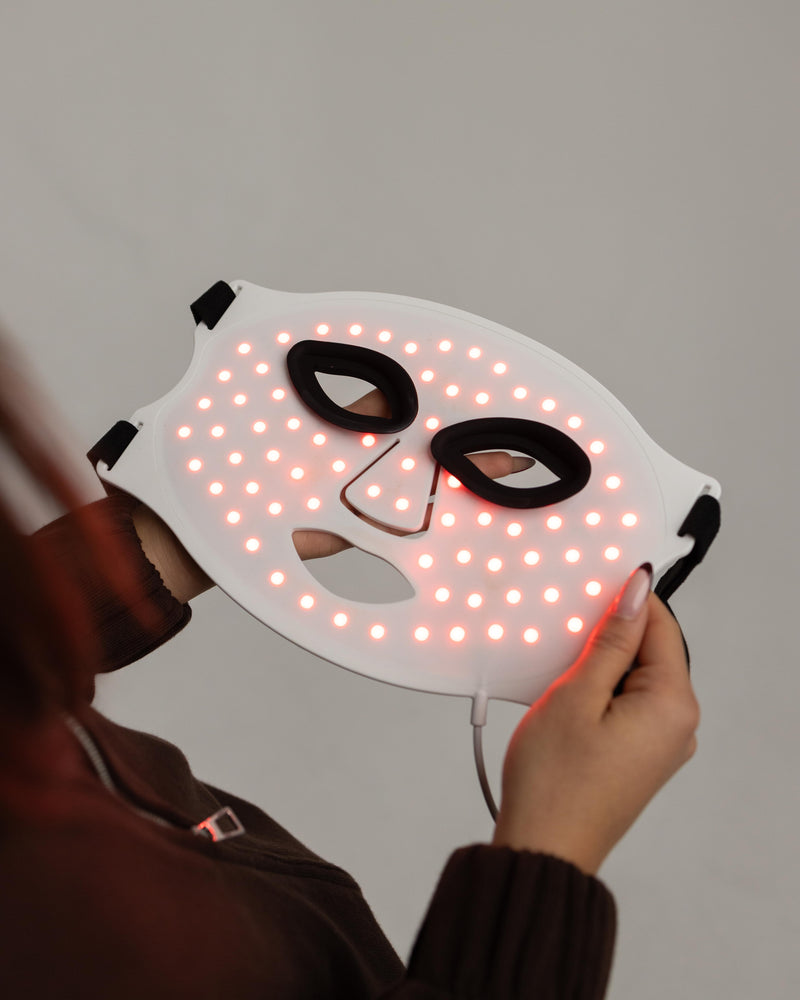
An LED face mask is a home device that uses coloured light (most often red and blue) to support the skin — red light stimulates collagen production and smooths fine wrinkles, blue light helps against the bacteria that cause acne. A treatment usually takes 10 minutes a day and is painless. Most people report the first visible changes after 3–4 weeks of regular use.
What an LED mask is and how it works
An LED mask uses so-called light therapy (phototherapy). The diodes emit light of a precise wavelength that penetrates different layers of the skin and triggers natural processes in it. It is neither heat nor UV radiation — the skin does not burn or dry out. That is exactly why it can be used at home and on a regular basis.
What the individual light colours help with
-
Red light (~630 nm): supports collagen production, improves elasticity and smooths fine lines and wrinkles. Suitable for more mature skin and anti-ageing.
-
Blue light (~460 nm): acts against the bacteria that cause acne and helps calm inflammation and redness.
-
Green light (~520 nm): evens out skin tone and helps reduce pigment spots.
-
Combined modes: modern masks can combine colours (e.g. against acne and pigmentation at the same time), so they adapt to what your skin needs right now.

We covered the difference between red and blue light, and when to use which, in detail in the article red vs. blue light.
Which problems an LED mask is suitable for
LED therapy is most often used for fine wrinkles and loss of firmness, acne and blemishes, redness and uneven skin tone, and overall brightening of tired skin. Specifically for wrinkles and loss of firmness, read how red light works in an LED mask for wrinkles. It works as complementary care — it does not replace a healthy routine or, for more serious skin problems, professional treatment, but it can support them well in the long term.
LED mask at home vs. salon treatment
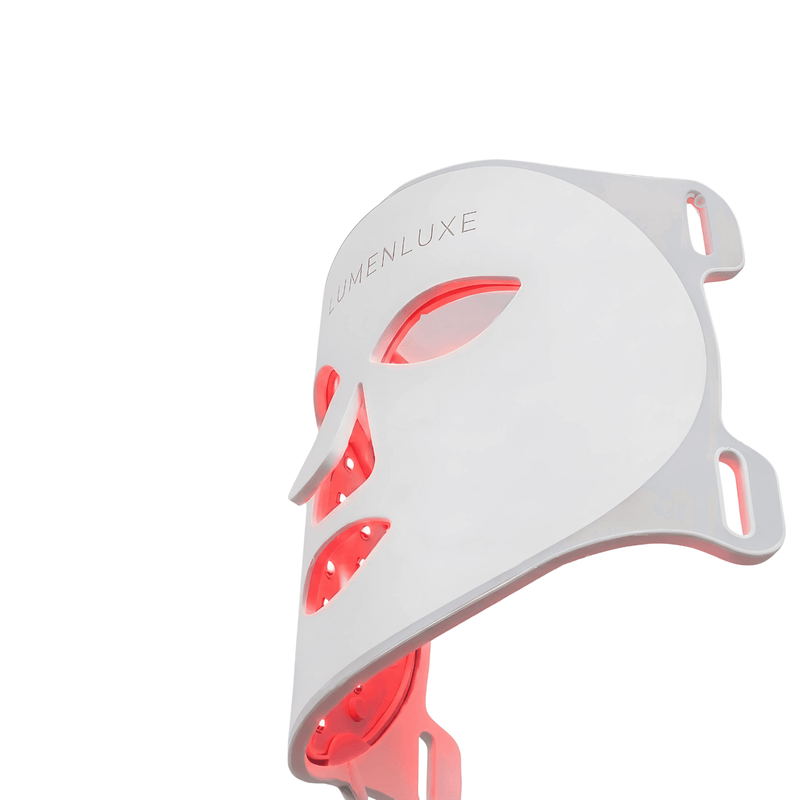
A salon light treatment is cheaper as a one-off, but you need a series of repeat visits to see results. A home LED mask is a higher one-off investment, but with regular use it works out at cents per treatment and you have it at hand whenever you want. We look at how LED therapy holds up against Botox and laser in the article LED mask vs. Botox and laser. If you want to see the specific specs straight away, take a look at the LumenLuxe LED mask with 210 LEDs and 7 light colours.
How to choose a good LED mask
-
Number and coverage of LEDs — more LEDs (e.g. 200+) mean more even coverage of the whole face without missed spots.
-
More colours/modes — a mask with 7 colours covers more problems than a single-colour one.
-
Certification and safety — look for documented quality and safety for sensitive skin.
-
Timer — automatic switch-off after 10 minutes ensures the correct light dosage.
-
Guarantee and reviews — verified reviews from real customers and a guarantee (e.g. 60 days for returns) reduce the risk of the purchase. The LumenLuxe LED mask has 4.87/5 from over 100 verified reviews and a 60-day money-back guarantee.
How to use an LED mask
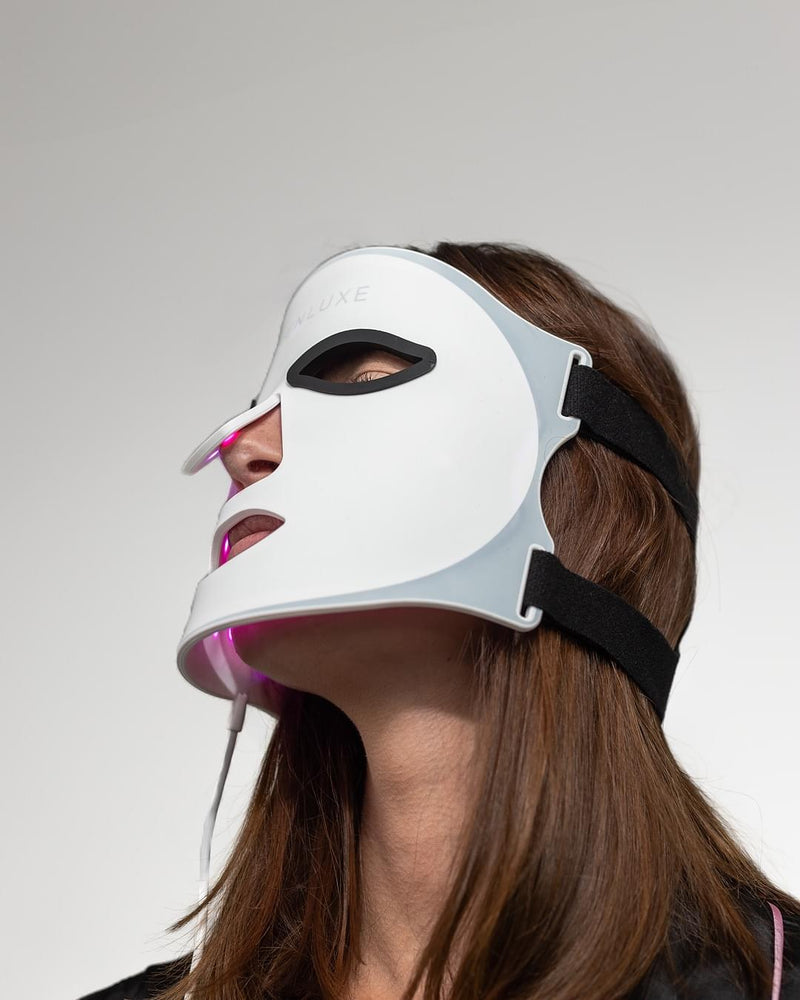
Put the mask on clean, dry skin, switch on the chosen mode and leave it on for about 10 minutes. Ideally, use it 3–5× a week. After the treatment, apply serum and cream — the skin absorbs them better after the therapy. Regularity is what matters: results come from repetition, not from a single use.
Experiences and reviews
Many users report that after a few weeks their skin is smoother and brighter and make-up goes on better; with acne, fewer breakouts. Experiences are individual — so it is worth reading specific reviews that describe the problem and how long it took for a change to come. You will find real, verified customer experiences by type of problem in the article LED face mask: reviews and experiences.
Frequently asked questions
How quickly will I see results? Most people report the first changes after 3–4 weeks of regular use (approx. 10 min a day).
Is an LED mask safe for sensitive skin? Yes, quality masks use neither UV nor heat, so they are suitable for sensitive skin too. If you have a skin condition, consult a dermatologist.
How often should I use it? Ideally 3–5× a week for 10 minutes. More is not necessarily better — regularity is what matters.
Will an LED mask help with acne and wrinkles at the same time? Yes, if the mask has both blue (acne) and red (wrinkles) light, or a combined mode.
When should I not use the mask? With acute skin conditions, after certain procedures or when taking light-sensitive medication — in those cases, consult a professional first.
👉 See the LumenLuxe LED mask — 210 LEDs, 7 light colours, 60-day money-back guarantee.